MAKAM: RE-LIVED
Real-life story of survivor Leong Lin Chi or Pramila Das
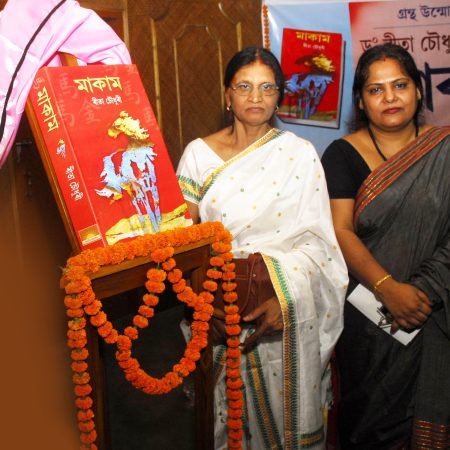
In Leong Lin Chi’s words
‘I was a six-year-old child when I got separated from my parents during the Sino-India war in 1962. Hailing from the Chinatown of Makum in Assam’s Tinsukia district, my parents, like many others, were sent to the Deoli Internment camp in Rajasthan during the war by the Indian authorities (on the erroneous suspicion of them conducting spy activities).
After a few years, they were deported from the camp to China – never to return. It took me 53 years to reunite with my parents. Now I’m 65, and a mother of two, and I (still) recall my days of separation and reunion caused by a war (we had nothing to do with).
When the police came searching for my parents in the Rangagora tea estate (Her father, Leong Kok Hoi, worked as a carpenter at the tea estate), I was at my grandparent’s house. They whisked away my parents, along with many others in the community. My father was a Chinese, in his 30s. He (came to) Tinsukia as a tea garden labourer in 1956. My mother, Chanu, was a Mizo woman. However, due to her facial appearance, the police took her for a Chinese and put her in the camp. (Our house and property too were also seized by the government as enemy property.)
When the war got over in the last week of November 1962, my aunt, who was also kept in a nearby prison, came back home. She wanted my sisters and me to reunite with my parents. But I was not as lucky as my sisters… It was a cold December morning. (We had to catch a train to Rajasthan to be united with my parents who were held at the Deoli internment camp.)
When the train arrived, my aunt (let go of my hand) and tried to get my little sisters on the train first. Suddenly, there were a lot of people waiting for the same train; they started pushing past me to get on it. I tried hard to push myself in. But, the train started moving without me… (I did not make it on the train.)
(I was parted forever from my parents. As a six-year-old it seemed my world had come crashing down. I was taken in by relatives. I remember I would pray every day for my parents.)
Most of (the people) who were taken to the Deoli camp, did not come back. Two years after the war, in 1964, we heard that a large ship came from China to take them to China. My parents (were) on the ship. They never came back. Afterwards, I was given an Assamese name by one of my uncles. I became Pramila Das from Leong Lin Chi.
The years rolled by with no news. It was in 1990, I received the first letter from my father who was living in Guangzhou province of China. He claimed that he had written to me several times. Yet, over the last 30 years, I had never received any such letters. When I got the letter, I became hopeful about getting to meet my parents once again.
But the wait was long. It was only in 2015 that I met an author called Rita Chowdhury. She was writing a novel on the wartime sufferings of the Chinese community in Assam. With her efforts and the help of many others, finally, after 53 years, I got to see my parents.
I always had this picture of them in my mind as young, happy and giggling while working in the tea gardens. But when I met them, they were old and fragile, which made me very emotional. I stayed with them for a month. Every day, I listened to their stories of the Deoli camp, about how they missed me but had to go to China without me.
My father said that he could die in peace, now that he had met me. In 2019, he passed away. My mother, though Mizo, still lives in China. My two sisters got married to Chinese men there. I now live with my family in the Kehung Tea Estate of Tinsukia. I regularly talk with my mother over the phone. I hope to bring her to India someday.’
Leong Linchi lives with her extended family in Tinsukia, Assam. It was the untiring efforts of Dr Chowdhury that finally led to Leong Lin Chi’s meeting with her parents in 2016.
EXCERPTS OF REVIEWS
Amitav Ghish, Novelist – ‘Rita Chowdhury is an energetic and empathetic storyteller…’
Good Reads – Originally published in Assamese as Deo Langkhui, (The Divine Sword), a stupendous novel, won the Sahitya Akademi Award in 2008. It weaves an epic saga immersing the reader in the blood-soaked tapestry of Assamese history.
Sohini Reads & Reviews – The Divine Sword highlights the power of love and redemption, anger and betrayal, revenge and forgiveness. With its true portrayal of the characters and events, The Divine Sword comes extremely close to being labelled as an epic. If you have read The Palace of Illusions, or love reading historical novels, then The Divine Sword is the perfect book for you.https://poesyinchrysalis.wordpress.com/2024/04/03/book-review-the-divine-sword-by-rita-chowdhury/
thestorygraph.com – Every character, even those flawed like Pratapchandra and Dhaneswar, contributes to a rich tapestry of emotions and complexity.
https://assets.thestorygraph.com/book_reviews/e30077d4-e63f-4890-97b6-c0929d448c65
AUTHOR’S VOICE
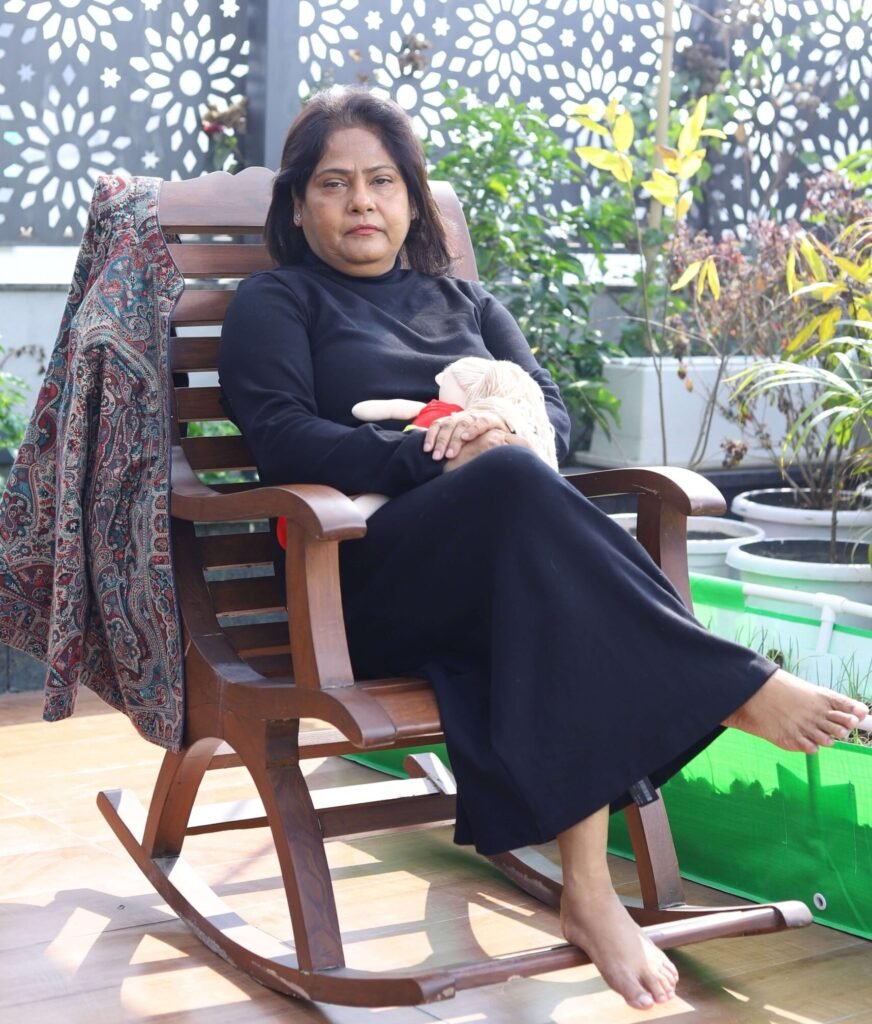
‘The genesis of Makam lies in a small incident that happened decades before I actually wrote the book. I was a college student then, and happened to be passing through Makum (the last railway junction in upper Assam), when I noticed a few Chinese people on the roads. I was curious – what were they doing in this remote part of Assam? Someone mentioned that these Chinese people had been brought here during World War II. The story stayed with me, and years later I decided to find out more… My research brought to light a long forgotten chapter of history, the tragedy that befell the Assamese Chinese community during and after the Sino-Indian War of 1962. It struck a chord in me, and touched my heart deeply. I took it as my responsibility to bring the story to light, hushed up for almost 45 years. During the war, a community so closely attached to the greater Assamese society suddenly vanished. No one knew where they went nor did anybody try to know what happened to them. I met many victims living in Assam and other parts of India and abroad, especially Hong Kong. It became my mission. It took me four years to assimilate all the facts and write the novel.’
And so was born Makam / Chinatown Days, a coffee table book, The Divided Soul and a documentary ‘War and Tears’.